Skip to search and filter Image UITS’ Matt Stoner Selected as AI Fellow Aug. 31, 2026 With the rapid growth of artificial intelligence, the University of Arizona needs to responsibly adopt and govern AI in practice. The Office of Responsible AI (ORAI) sought out faculty and staff leaders who understand AI’s implications for their areas of work and are motivated to help shape guidance for the university. Potential University of Arizona AI Fellows applied in spring 2026 and were selected at the end of July, including UITS senior information systems manager Matt Stoner. Read more HPC Buy-In Opportunity June 4, 2026 The university’s Research Data Center (RDC) is preparing to install a new HPC cluster in fall 2026. The new system will have 40 nodes of CPU compute, two 8-GPU nodes with H200 GPUs, and one 3TB High-memory node, and will incorporate InfiniBand networking for MPI capabilities. It will be available sometime in the later part of this year. Read more Image Bringing Sci-Fi Future to Life May 27, 2026 Chancellor Woolsey grew up in a small Missouri town where he spent his plentiful free time marveling at fictional depictions of the future. He watched computers advance, and in his college years 3D printing, then ChatGPT. Somewhere between Star Wars marathons and a lifelong love of science fiction, he developed a question that would follow him to a PhD program at the University of Arizona: what if the technology we've been dreaming about on screen could actually help people? Read more New U of A AI Resources May 20, 2026 The university’s AI roadmap has reached some significant milestones, shared in a town hall opened by chief AI officer David Ebert. The biggest news is that campus community members now have access to U of A GenAI collection built on AWS Bedrock. This includes the generative AI platforms that can support teaching, learning, research and administrative work. All are private and FERPA compliant, though not HIPAA compliant. Read more Image Student Interns for Hands-on Tech Experience May 13, 2026 What is the IT job market going to look like in three years? With the advances in technology, especially Artificial Intelligence, it’s difficult to know, which is especially challenging for students working towards their degrees. Luckily, researchers at the University of Arizona are engaged in numerous important projects, from machine learning to quantum computing to health sciences and health sciences engineering. Read more Image Picturing Research at Biosphere 2 April 6, 2026 What will happen to rainforests as global temperatures rise with climate change? Biosphere 2 has the hottest rainforest on the planet—there’s a huge temperature change from the shaded forest floor to the top of the tree canopy under the Arizona sun. That makes it the ideal place for postdoctoral researcher Justin Bestily to study resilience in plant life. Read more Image Laying the Groundwork for Modern Research Feb. 2, 2026 It’s easy to take today’s research technology for granted. But looking back reveals just how transformative the journey has been and how intentional investments have made discovery possible. In the late 1980s and early 1990s, scientific research became more collaborative, data-driven, and dependent on computing power that extended beyond a single lab or campus. At the University of Arizona, technology teams were responding in real time, building the infrastructure needed to support a new era of networked research. Read more Image HPC Advance Brain Health Research Oct. 27, 2025 The University of Arizona is helping unlock the mysteries of how our brains age, one powerful MRI scan at a time. At the center of this work is the Precision Aging Network (PAN), a nationwide study led by Dr. Carol Barnes that’s examining more than 1,000 diverse participants across four U.S. cities: Atlanta, Baltimore, Miami, and Tucson. Read more Image Seeing Research at Scale Aug. 29, 2025 How do you make sense of thousands of research papers at once? For researchers, the challenge of keeping up with an ever-expanding body of literature can feel overwhelming. That’s where Vis-Sieve, a new prototype tool, comes in. Read more Image Organ Donation Data Improved with HPC Aug. 29, 2025 There are an estimated 37 million Americans with chronic kidney disease. Over 27 thousand Americans received transplants in 2024, with many more on the donor waiting list. The average transplant cost is close to $80,000 for Medicare patients. With numbers like these, it’s critical to improve outcomes and reduce overall costs. More data analysis on resource allocation, the risks for candidates and the viability of donor organs can help. Read more Pagination … 1 2 3 … Next › Next page Last » Last page
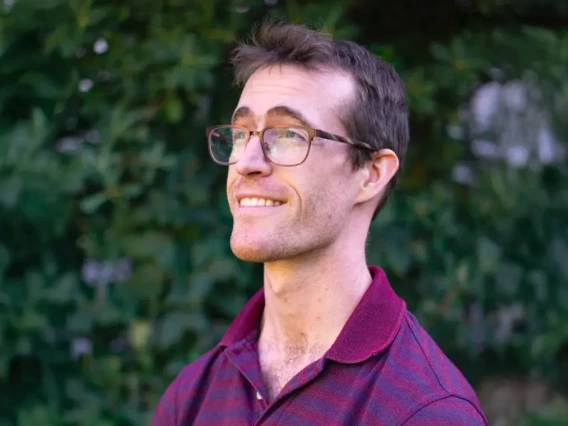
Image UITS’ Matt Stoner Selected as AI Fellow Aug. 31, 2026 With the rapid growth of artificial intelligence, the University of Arizona needs to responsibly adopt and govern AI in practice. The Office of Responsible AI (ORAI) sought out faculty and staff leaders who understand AI’s implications for their areas of work and are motivated to help shape guidance for the university. Potential University of Arizona AI Fellows applied in spring 2026 and were selected at the end of July, including UITS senior information systems manager Matt Stoner. Read more
HPC Buy-In Opportunity June 4, 2026 The university’s Research Data Center (RDC) is preparing to install a new HPC cluster in fall 2026. The new system will have 40 nodes of CPU compute, two 8-GPU nodes with H200 GPUs, and one 3TB High-memory node, and will incorporate InfiniBand networking for MPI capabilities. It will be available sometime in the later part of this year. Read more
Image Bringing Sci-Fi Future to Life May 27, 2026 Chancellor Woolsey grew up in a small Missouri town where he spent his plentiful free time marveling at fictional depictions of the future. He watched computers advance, and in his college years 3D printing, then ChatGPT. Somewhere between Star Wars marathons and a lifelong love of science fiction, he developed a question that would follow him to a PhD program at the University of Arizona: what if the technology we've been dreaming about on screen could actually help people? Read more
New U of A AI Resources May 20, 2026 The university’s AI roadmap has reached some significant milestones, shared in a town hall opened by chief AI officer David Ebert. The biggest news is that campus community members now have access to U of A GenAI collection built on AWS Bedrock. This includes the generative AI platforms that can support teaching, learning, research and administrative work. All are private and FERPA compliant, though not HIPAA compliant. Read more
Image Student Interns for Hands-on Tech Experience May 13, 2026 What is the IT job market going to look like in three years? With the advances in technology, especially Artificial Intelligence, it’s difficult to know, which is especially challenging for students working towards their degrees. Luckily, researchers at the University of Arizona are engaged in numerous important projects, from machine learning to quantum computing to health sciences and health sciences engineering. Read more
Image Picturing Research at Biosphere 2 April 6, 2026 What will happen to rainforests as global temperatures rise with climate change? Biosphere 2 has the hottest rainforest on the planet—there’s a huge temperature change from the shaded forest floor to the top of the tree canopy under the Arizona sun. That makes it the ideal place for postdoctoral researcher Justin Bestily to study resilience in plant life. Read more
Image Laying the Groundwork for Modern Research Feb. 2, 2026 It’s easy to take today’s research technology for granted. But looking back reveals just how transformative the journey has been and how intentional investments have made discovery possible. In the late 1980s and early 1990s, scientific research became more collaborative, data-driven, and dependent on computing power that extended beyond a single lab or campus. At the University of Arizona, technology teams were responding in real time, building the infrastructure needed to support a new era of networked research. Read more
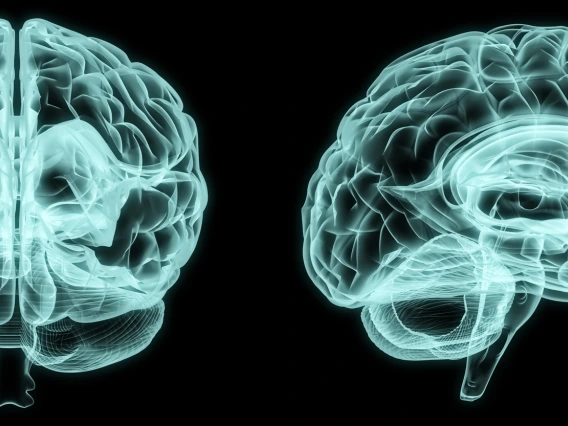
Image HPC Advance Brain Health Research Oct. 27, 2025 The University of Arizona is helping unlock the mysteries of how our brains age, one powerful MRI scan at a time. At the center of this work is the Precision Aging Network (PAN), a nationwide study led by Dr. Carol Barnes that’s examining more than 1,000 diverse participants across four U.S. cities: Atlanta, Baltimore, Miami, and Tucson. Read more
Image Seeing Research at Scale Aug. 29, 2025 How do you make sense of thousands of research papers at once? For researchers, the challenge of keeping up with an ever-expanding body of literature can feel overwhelming. That’s where Vis-Sieve, a new prototype tool, comes in. Read more
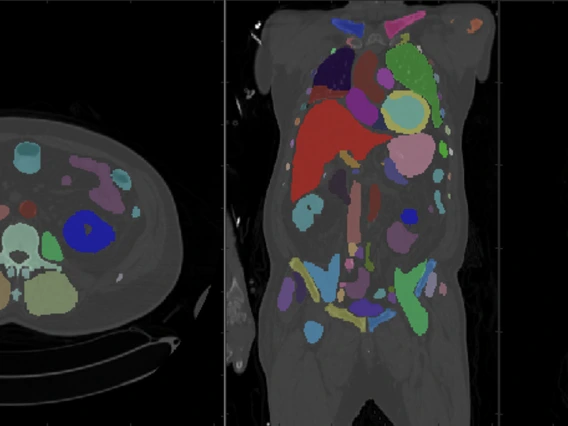
Image Organ Donation Data Improved with HPC Aug. 29, 2025 There are an estimated 37 million Americans with chronic kidney disease. Over 27 thousand Americans received transplants in 2024, with many more on the donor waiting list. The average transplant cost is close to $80,000 for Medicare patients. With numbers like these, it’s critical to improve outcomes and reduce overall costs. More data analysis on resource allocation, the risks for candidates and the viability of donor organs can help. Read more